Diversity & Inclusion Matter

In the past year, the United States has gone through some things. We are still in the grips of a global pandemic, have seen levels of social unrest skyrocket, and watched a failed insurrection at our Capital.

When events like these happen, we look to the news to relay what the experts are saying, and to bring us live coverage or tell us unbiased stories. Yet, when the people who bring us the news are not representing the diverse audience of the general public, are we actually hearing the whole story?

Photo by Ono Kosuki from Pexels

As we try to navigate through these uncertain times, heal the divisiveness in our nation, and ensure we are hearing accurately represented stories, one of the biggest steps we can take is to add more diversity to our newsrooms.

As cited by the Columbia Journalism Review, “According to the Census Bureau, racial and ethnic minorities comprise almost 40 percent of the US population, yet they make up less than 17 percent of newsroom staff at print and online publications, and only 13 percent of newspaper leadership.”

That’s a large disparity, especially when the American Society of News Editors (ASNE) convened back in 1979 to promise that the amount of racial and ethnic minorities in newsrooms would accurately reflect that of the population by 2020.

There are a number of issues when it comes to the reasons for a lack of diversity in journalism. The root of the problem stems from the ways that people tend to enter the profession –  traditionally through a degree from a college or university, or an unpaid internship at a publication. For most people who are not financially stable, one or both of these avenues can be exceedingly difficult to achieve.  Another issue lies in the fact that most job openings are never posted to the public, but instead made available through the networks developed by higher education or internships. And since people have a tendency to affiliate with others who share similar demographics, the routine hiring based on word of mouth tends to lead to managers hiring more of the same, rather than choosing from a diverse pool of applicants. 

Minorities who are hired tend to receive the least amount of mentoring, advancements into management, and when newsrooms (or just about any other company for that matter) are forced to cut staff, they are often the first to go. With many news agencies just trying to survive the evolution from print to digital and the lost revenue that’s accompanied it, the achievement of diversity seems to have gotten stuck on the sidelines, but there are many reasons why diversity should be a top priority.

When your background, characteristics, and experiences are similar to that of everyone around you, it limits the perspective you can have.

One reason is that the lack of diversity can also lead to other woes, because when your background, characteristics, and experiences are similar to that of everyone around you, it limits the perspective you can have. And no matter how unintentional, these limits create bias and leave plenty of room open for confusion. Biases and confusion can cause mistakes during broadcasts or lead to poorly written headlines, prompting severe backlash, especially on social media. Some instances include BBC showing an image of LeBron James during a news broadcast about the Kobe Bryant helicopter accident, or The Hollywood Reporter blatantly forgetting to add any women of color to its list of top female actresses in cinema, nor can we forget the infamous 2014 KTLA interview when Samuel L. Jackson was mistaken for Laurence Fishburne live on air.

With the blowback that social media resentment can have on an already struggling company, it is imperative that newsrooms diversify for their own good, and identifying the patterns that allow for these disparities are key to changing the culture that has allowed them to occur in the first place. 

Among the many agencies who have started implementing diversity and inclusion in staff and management, one company who has seen a profound impact from their initiatives is Vox Media. By conducting formal training in diversity and inclusion for management, tracking diversity among staff, finding out why people leave the company, and executing quarterly surveys to measure feelings of inclusion, Vox has seen the percentage of minority employees double in the last five years.

Photo by Christina Morillo from Pexels

Unfortunately, for many other companies, progress seems to be at a snails pace and more action is greatly needed, especially from leadership. Those at the top need to not only recognize, but value the importance of having a diverse staff rich in backgrounds and experiences.

When the news is shared from a broad range of people, it ultimately leads to a more fulfilling experience for a mosaic audience who identify not just with the stories, but with the storytellers. And when events of the century seem to occur everyday, having a varied perspective in the news can lead to greater audience engagement, retention, and trust in knowing that we are getting the full picture.

The following sources were cited in this post:

  1. Arana, G. (2018). Decades of Failure. In Columbia Journalism Review. Retrieved from https://www.cjr.org/special_report/race-ethnicity-newsrooms-data.php
  2. Frost, S. (2020, January 27). The Importance Of Diversity In The Newsroom. In Forbes. Retrieved from https://www.forbes.com/sites/sfrost/2020/01/27/the-importance-of-diversity-in-the-newsroom/?sh=280d15893132
  3. Kovac-Ashley, A. (2021). Diversity and inclusivity in journalism. In American Press Institute. Retrieved from https://www.americanpressinstitute.org/diversity-programs/
Calvin College openURL resolver

Deepfakes in the Digital Age

You may have seen them. You may have heard of them. They’re deepfakes and they’re more common than you might have imagined.

For the most part, deepfakes are videos that manipulate the image and likeness of one person and place them onto another. Think of it as mixing CGI with deep learning AI and you’ve got a perfect recipe for deepfakes. If you thought only big movie studios were creating these types of videos, think again, everyone from university researchers to the government utilizes this technology for a variety of reasons. And with new software, programs, and apps, it’s easier than ever for an amateur or enthusiast to create them.  

Photo by Junior Teixeira from Pexels

Deepfakes were first spotted on Reddit in 2017 when a user posted doctored pornographic videos featuring the faces of celebrities such as Taylor Swift or Scarlett Johansson. While a lot of deepfakes are easy to spot due to obvious lighting differences, blending issues or abnormalities on the edges of a face, badly rendered details such as hair, teeth, or jewelry, these videos are getting better and better as new technologies and algorithms are developed. Early on, one of the easiest ways to identify a deepfake was the lack of blinking, since most photos of people have their eyes open, but once it was announced as a way to distinguish a deepfake, creators started adding blinks to make their fakes harder to detect.

So how is a deepfake created?

To create a really good deepfake, you will need a sophisticated computer with robust graphics cards capable of handling advanced software and loads of media.

According to Ian Sample of the Guardian, “First, you run thousands of face shots of the two people through an AI algorithm called an encoder. The encoder finds and learns similarities between the two faces, and reduces them to their shared common features, compressing the images in the process. A second AI algorithm called a decoder is then taught to recover the faces from the compressed images. Because the faces are different, you train one decoder to recover the first person’s face, and another decoder to recover the second person’s face. To perform the face swap, you simply feed encoded images into the ‘wrong’ decoder.” 

Photo by luis gomes from Pexels 

Deepfakes are not just limited to video. They now include audio deepfakes which use  “voice skins” or ”voice clones,” from recordings such as interviews, movies, or even voicemails. Additionally, deepfakes might embody entirely fictional characters created with a GAN.

Sample writes, “A Gan pits two artificial intelligence algorithms against each other. The first algorithm, known as the generator, is fed random noise and turns it into an image. This synthetic image is then added to a stream of real images – of celebrities, say – that are fed into the second algorithm, known as the discriminator. At first, the synthetic images will look nothing like faces. But repeat the process countless times, with feedback on performance, and the discriminator and generator both improve. Given enough cycles and feedback, the generator will start producing utterly realistic faces of completely nonexistent celebrities.” 

If you don’t have the know-how, hardware, or the time to create your own deepfakes, there are now companies who will make them for you. Or with Zao, an app for your smartphone, you can put your face onto an actor and star in your favorite movie or television show.

Why do people make deepfakes?

Like the original deepfakes from Reddit, the most common reason is for pornography. In September of 2019, Deeptrace, a cybersecurity company based in Amsterdam which monitors and detects synthetic media online, reported almost 15,000 deepfake videos in that month alone. Approximately 96% of the deepfakes were pornographic, with 99% of the mapped faces being from female celebrities. In this report, Deeptrace also concluded that “deepfake pornography is a phenomenon that exclusively targets and harms women. In contrast, the non-pornographic deepfake videos we analyzed on YouTube contained a majority of male subjects.” And with easier to use technologies being introduced everyday, the jump from celebrity porn to revenge porn has the very real and unfortunate chance of becoming a very real and unfortunate problem. 

Photo by Anna Shvets from Pexels

The sinister side of deepfakes can also include scams such as using a voice clone to trick a victim into transferring money for a loved one in need, or simply to humiliate a target or harm their reputation. Another issue lies in the eroding trust that deepfakes can have on the public. People caught in embarrassing situations on video can now call the video’s authenticity into question. If consumers constantly have to worry about synthetic media, how can they know that something they’re watching is real, or put their trust in it?

A factor that further aggravates the situation is the dwindling amount of journalists and reporters due to cutbacks who would have once been available in droves to seek out these fakes, investigate them, and uncover the truth or even the people behind them. Luckily, universities, governments, cybersecurity firms and tech companies have been funding research to patrol the internet, discover synthetic media, and warn society about harmful deepfakes. Tech giants like Amazon, Facebook, and Microsoft have also funded global competitions such as the Deepfake Detection Challenge to help uncover and deter harmful deepfake creators. Facebook has also taken steps to ban deepfakes that can easily dupe users.

Outside of porn and malevolent intent, there is another, lighter side to deep fakes which are used for entertainment or educational purposes, such as the popular YouTube creators, Ctrl Shift Face, who create spoof reels including one from The Shining, where Jim Carrey has been inserted into Jack Nicholson’s role; or Jordan Peele becoming former President Obama as a PSA to warn the public about the prevalence of deepfakes and how good they can be. The technology has been used to improve voice dubbing in movies, or even to bring actors back from the dead. A very positive use of deepfakes is when voice clones are adopted to replace the voices of people who have lost theirs due to accidents or disease.

Ctrl Shift Face – The Shining starring Jim Carrey : Episode 1 – Concentration [DeepFake]

With more people jumping on the synthetic media bandwagon, the advancements in AI, and accessibility to programs and devices that are capable of creating deepfakes, it is a technology that is here to stay. As media consumers we must remain aware that anyone, anywhere can create and share content, and the reasons for them doing so may not always be sound. We must remember that with deepfakes floating around the internet, the old saying still applies in the Digital Age, “If something is too good to be true, it usually is.”

The following sources were cited in this post:

  1. Ajder, H., Patrini, G., Cavalli, F., & Cullen, L. (2019, September). The State of Deepfakes: Landscape, Threats, and Impact. In Regmedia. Retrieved from https://regmedia.co.uk/2019/10/08/deepfake_report.pdf.
  2. Bloomberg Quicktake. (2018, September 27). It’s Getting Harder to Spot a Deep Fake Video. In YouTube. Retrieved from https://www.youtube.com/watch?v=gLoI9hAX9dw.
  3. Marcin, T. (2020, August 2). 13 of our favorite deepfakes that’ll seriously mess with your brain. In Mashable. Retrieved from https://mashable.com/article/best-deepfake-videos/.
  4. Sample, I. (2020, January 13). What are deepfakes – and how can you spot them?. In The Guardian. Retrieved from https://www.theguardian.com/technology/2020/jan/13/what-are-deepfakes-and-how-can-you-spot-them.

It Loves It When You Call It Big Data

Who run the world??

I know all my Beyonce fans are probably shouting “GIRLS!” right now, and while you’re technically not wrong, the correct answer is Big Data.

Big Data is everywhere and a part of everything you do. Whether you’re using a device that’s connected to the internet or not, you are still in Big Data’s web. Memberships, loyalty cards, credit cards – any time you fill out a form or scan or swipe a card, as well as visit a website, use an app, check your email, play a game, use a voice assist device, or a smart appliance, your information and habits are being tracked and stored in the database of that particular store, platform, or application. 

Photo by cottonbro from Pexels

Think about the last time you went to CVS, did you notice how all the coupons on that loooooooong receipt relate back to items you regularly purchase, and it just so happens that you get coupons for items you need right before you need them? How about the Google Maps alert letting you know there is traffic on your regular route home from work? Or, when you’re browsing your emails on your laptop, open an email and click on the link for some cute boots, you then see an ad for the same boots on your feed in the Facebook app on your phone. The same ad may even follow you around to every website you visit for the next week on both devices. That’s not a coincidence. 

Photo by Karolina Grabowska from Pexels

And if you cave, purchase those cute boots, and manage to hide them from your husband? Big Data still knows. And Big Data will happily show you the items that other customers looked at who purchased the same boots, suggest some some socks or shoe polish to complement your new kicks, or remind you that you still have other items in your cart that you forgot to buy.

So how does Big Data know so much?

One of the biggest contributors to Big Data is cookies. Not the kind you bake, but rather, the digital breadcrumbs you leave behind when browsing the Internet. Cookies are basic text files stored on your web browser so that a website can recognize your device, remember you, and track your habits over a period of time. Cookies record behaviors such as how you found the website, your preferences or settings, links you click, items you add to a virtual shopping basket, or the amount of time you spend on a page. 

In addition to cookies, web browsers such as Google Chrome will record further information such as your website search history, app activity, location, demographics, and if you’re using any type of voice assist devices or features, your voice and audio activity. 

Whereas the main purpose of Big Data is to improve your experience and  bring you more personalized and relevant content, it is also used to show you targeted ads. To be honest, if I’m going to see ads on every website or app I visit, I kind of like that they’re targeted specifically to me and my tastes. I also enjoy that when I am searching for certain keywords, Google will deliver results based on what it knows about me and what it thinks I am actually looking for. And if we’re being REALLY honest with ourselves, Google probably knows more about us and what we want than we do. 

Photo by Pixabay from Pexels

In fact, in 2008 Google developed their “Flu Trends” site when they realized that they could predict spikes in flu cases in a given area approximately two weeks ahead of the CDC, based on the amount of people in that location who were Googling specific symptoms. In 2020, they were able to assist with tracking the spread of Covid-19 using user search data and released a Covid overlay for Google Maps, showing areas where Covid is being reported or having spikes in cases, making it especially convenient to keep up with the constant changes that emerge during public health crises.

While the main feature of Big Data is convenience, it comes at the price of our privacy. But we ourselves are the main contributors of our information to Big Data, and what we giveth, we can also taketh away. On virtually every platform there are controls for managing the tracking of personal data. You can also regularly delete your browsing history, cookies, and other digital activity. New laws have been enacted to help protect our privacy online. In 2018, the European Union became the frontrunner in the battle against Big Data and implemented the General Data Protection Regulation, which among other things, now requires websites to alert you to their use of cookies and to obtain your explicit permission for the website to use them. This law was designed to protect the citizens of the EU, but because businesses want the online traffic of the EU population, most websites have fallen in line with the disclosure of data collection around the world.

Like the Digital Age, Big Data has become intertwined in every part of our lives and is here to stay. Though we must remain vigilant in the battle for online privacy, having content directly targeted to us rather than sifting  through mountains of meaningless digital rubbish has its benefits. It allows us to have more customized, convenient, and meaningful experiences online and in our daily lives. It helps us to navigate through uncertain times, can keep us informed, and eventually, lets us get back to worrying about things like where to hide the purchases we made due to those personalized ads.

The following sources were cited in this post:

  1. Helft, Miguel. “Google Uses Searches to Track Flu’s Spread.” The New York Times, 11 Nov. 2008, www.nytimes.com/2008/11/12/technology/internet/12flu.html.
  2. Keach, Sean. “ROOKIE COOKIES: What is a cookie, should you accept them, and if you don’t what happens?” The Sun, 9 Aug. 2019, www.thesun.co.uk/tech/6507593/what-is-cookie-internet-accept-info-decline-delete-cookies-explained/.
  3. Nield, David. “All the Ways Google Tracks You—And How to Stop It.” Wired, 27 May 2019, www.wired.com/story/google-tracks-you-privacy/.

Welcome to the Splinternet

As the internet ascended into a global, dominating force with the power to defy physical borders and connect everyone who connects to it, the dream that it would break down the invisible barriers that divide us rose with it. 

With so much information available at our fingertips, one would assume that we would be become smarter, more educated, and therefore more open-minded or empathetic towards our fellow humans and their customs, thoughts, and beliefs. Instead, it seems to have caused further separation, as algorithms in our social media feeds show us the news that we agree with and the phenomenon of selective exposure causes us to only seek out the information that makes us confident in our convictions. Instead of bringing us together, it seems we are being torn apart. Welcome to the Splinternet.

Photo by Anna Shvets from Pexels

While the Digital Age has caused a renaissance of informational enlightenment, in many ways it has brought out the ugly side of humanity. Anyone, anywhere can now create content and share it with the world. Disinformation is rampant, and when people can hide behind a computer they feel a false sense of bravado in spewing lies, hate, and propaganda without consequence. 

In the US, the First Amendment protects the freedom of speech; however, those freedoms do not extend to hate speech, inciting crime, fighting words, or true threats. But when the internet has global reach, how can the laws of just one country govern it? And should it be the government’s job to regulate the internet? Or should it be up to the private companies who’s platforms are used to spread the messages of hate, violence, or lies? Who’s responsibility is it? 

Not a one size fits all solution

The splinternet has landed us in the middle of an internet gray area with no simple solution. 

Europe, and Germany in particular, have been on the forefront when it comes to laws preventing hate speech and maintaining data privacy online. In 2018, Germany enacted tough new legislation to combat hate speech, including a provision in which “companies [who] systematically fail to remove ‘obviously illegal’ content within 24 hours can face fines of up to 50 million euros.”

But what some people may view as offensive, may not appear that way to others, and with so many cultural differences, what is ok in one country may not necessarily be ok in another. So where does regulation end and censorship begin?

In a 2019 Washington Post OpEd, Facebook CEO Mark Zuckerberg contended that the government and third-party regulators need to play a more active role in supervising the internet, stating, “we need new regulation in four areas: harmful content, election integrity, privacy and data portability.” 

Photo by Colin Lloyd from Pexels

During the start of the pandemic, in the midst of social unrest, and leading up to the 2020 US elections, many social media companies launched a war against misinformation online. After the events of the January 6th insurrection at the US Capital, the boiling point was reached, and private companies made the tough decisions to shut down user accounts or entire platforms for violating their terms of service or laws against hate speech and inciting violence.

But even while taking these necessary steps to reduce the flow of misinformation and hateful propaganda being spread online, private companies still want governments to offer guidance and take some of the burden of regulating the internet from their digital shoulders.

But while governments can make laws about online speech, private companies are still left to interpret how to follow them; therefore, some countries will still ban specific platforms, while other countries ban the internet all together.

Photo by Andrea Piacquadio from Pexels

With so many different views it seems almost impossible that we can come to a full agreement. The Splinternet leaves open so many questions, without giving so many answers, but as Uncle Ben in Spiderman said, “With great power comes great responsibility.” And perhaps while we wait for governments and private companies to figure it out, by being thoughtful and personally responsible for what we ourselves share online, we can help fulfill the dream of the internet bringing people together.  

The following sources were cited in this post:

  1. Bennhold, K. (2018, May 19). Germany Acts to Tame Facebook, Learning From Its Own History of Hate. In The New York Times. Retrieved from https://www.nytimes.com/2018/05/19/technology/facebook-deletion-center-germany.html
  2. Campbell, Richard, et al. Media & Culture: Mass Communication in a Digital Age. 12th ed., Bedford/St. Martin’s, 2019, pp. 9, 485.
  3. Ovide, S. (2021, February 17). The Internet Is Splintering. In The New York Times. Retrieved from https://www.nytimes.com/2021/02/17/technology/the-internet-is-splintering.html
  4. Zuckerberg, M. (2019, March 30). Opinion: Mark Zuckerberg: The Internet needs new rules. Let’s start in these four areas. In The Washington Post. Retrieved from https://www.washingtonpost.com/opinions/mark-zuckerberg-the-internet-needs-new-rules-lets-start-in-these-four-areas/2019/03/29/9e6f0504-521a-11e9-a3f7-78b7525a8d5f_story.html

The Digital Divide

In my last blog, I mentioned major disparities pertaining to the availability of the internet for some people. It’s a topic that many who have the means to access to the internet may not think about, but it is important to consider because of the effects it can have on individuals and society. So this week, I wanted to take a deeper dive into the sobering realities of The Digital Divide, discuss some of the reasons behind it, and consider what can be done to close the gap.

The Digital Divide illustrates the difference between those who have access to reliable, high-speed internet, and the hardware to connect to it, and those who do not. There are three factions of the Divide: Global, Societal, and Personal. The Global Divide refers to the physical geography that contributes to the gap and may be the result of a country’s government limiting or banning access, or the lack of wealth to build the infrastructure. The Social Divide is attributed to differentiating factors within the same region like poverty, education, status, or lack of service providers. The Personal Divide differs from the Global and Social Divides, in that being unconnected is a personal choice. It is one that is usually fueled by suspicions of privacy invasion or the concern for information security.

Photo by Oleg Magni from Pexels

Even when it becomes a personal choice, being on the wrong side of the divide means not having access to the sheer amount of information, applications, opportunities, and education that the internet provides, and can have lasting negative repercussions on entire communities.

In NYC, one of the wealthiest cities in world, the pandemic has shed an ugly light on the Social Divide that separates its residents, and brought to the forefront the disparities that were already negatively impacting the city’s low-income communities of color. In 2015, a US Census report found that “one in three households in the Bronx and one in four households in Brooklyn lacked access to the Internet.” In 2019, the New York City Comptroller found that “about 30 percent of Latino and Black New Yorkers lack broadband Internet access, compared to 20 percent of white New Yorkers and 22 percent of Asian residents.” And this gap between the haves and the have nots has only been exacerbated in the last year.

Photo by Roberto Vivancos from Pexels

When Covid struck the United States in March of 2020, approximately 1.1 million public school children in New York City were forced into remote learning. Even in schools that have partially reopened with a blended learning program, children are still expected to learn remotely for the majority of their schooling. Even with the estimated 300,000 internet ready tablets the NYC Department of Education handed out in the spring, a whopping 60,000 students still did not have hardware as of December. And even for the children who did receive a tablet, access to a dependable wi-fi connection still poses a major issue. This dilemma means that tens of thousands of children are getting left behind academically, lessening their chances of becoming socio-economically equal and creating another crisis within a crisis.

What is the solution?

City Council members Farah Louis (D-Brooklyn) and Ben Kallos (D-Manhattan) have sought to close the academic and digital divides by introducing a bill in October 2020 which would provide every student with a laptop and culturally relevant digital books. The bill would also require transparency on all DOE computers, with a full report due by September 1, 2021 on the demographics, housing situations, and internet connections of the students using the laptops, and the DOE’s computer funding sources.

“Without computers or affordable internet access, the achievement gap will only worsen in divested communities. It is the City’s responsibility to accelerate their efforts to bring households into the 21st century, and help secure their future. If we cannot end the racial disparities that exist in the nation’s largest public school system, then we have failed 1.1 million students who deserve a head start in life.”

Farah Louis

In addition to the bill, Kallos, along with Brooklyn Borough President Eric Adams, introduced a new white paper titled “Bridging the Digital Divide for Every New Yorker with a Universal Internet Guarantee.” The declaration details why, in a world where we are now required to work, learn, and socialize virtually from the confines of our homes, having access to a stable, broadband Internet connection should be a right for every New Yorker, not just a privilege for some. The report is being “hailed as a comprehensive roadmap for achieving universal Internet access in New York City.” 

Photo by Anna Shvets from Pexels

So while the pandemic has inflamed the Digital Divide, it has also highlighted the need to close the gap. With everyone paying close attention to our reliance on the internet in these times of social distancing, people are more aware than ever of the need to connect virtually. It is an undeniable fact that there is a huge imbalance in our society when only some are allowed access to the fundamental tools to better themselves. We owe it to our children and to each other to find ways of providing equal access to learn, work, and socialize on the internet, even when we are not in a time of crisis. It is said that an educated society is a strong society, and during times like these we could all use more strength.

The following sources were cited in this post:

  1. Campbell, Richard, et al. Media & Culture: Mass Communication in a Digital Age. 12th ed., Bedford/St. Martin’s, 2019, pp. 56-57.
  2. President of the Borough of Brooklyn, Eric Adams. “BRIDGING THE DIGITAL DIVIDE: BP ADAMS, CM KALLOS RELEASE NEW REPORT LAYING OUT PATH TO UNIVERSAL INTERNET ACCESS IN NYC [Press Release].” https://www.brooklyn-usa.org/, 21 Dec. 2020, www.brooklyn-usa.org/bridging-the-digital-divide-bp-adams-cm-kallos-release-new-report-laying-out-path-to-universal-internet-access-in-nyc/.
  3. Rock, Michael. “Electeds Support Bill to Give Students Free Laptops and Tablets.” https://www.newyorkcountypolitics.com/, 30 Oct. 2020, www.newyorkcountypolitics.com/2020/10/30/electeds-support-bill-to-give-students-free-laptops-and-tablets/.
  4. Rock, Michael. “Louis, Kallos Introduce Bill to Give Students Free Laptops and Tablets.” https://www.queenscountypolitics.com/, Nov. 2020, www.queenscountypolitics.com/2020/11/02/louis-kallos-introduce-bill-to-give-students-free-laptops-and-tablets/.

When The Internet Gives You Ice Cream

I LOVE ICE CREAM.

I mean, who doesn’t?! If you answered “I don’t” to that question, then I don’t even know if we can be friends. 

But seriously, I really love it. A couple weeks ago I got a midnight craving for ice cream. I was comfortably tucked under a blanket on the couch with my husband. We were both in our pajamas and neither of us felt like going out in the cold.

Photo by Lukas from Pexels

Figuring what the heck, I opened up the Instacart app on my phone and about 20 minutes later, two pints of our favorite Ben and Jerry’s flavors showed up on the doorstep. It might’ve been the most expensive ice cream I’ve ever purchased in my life, but being in full couch potato mode, it felt like the best splurge I ever made.

This got me thinking about the convenience of the digital age and how easy certain aspects of it have made my life. When the internet can give you ice cream, what else can it do?

Photo by Josh Sorenson from Pexels

The Internet has greatly evolved since its creation by the DOD’s Advanced Research Projects Agency (ARPA). Originally called ARPAnet, it began as a distributed network system that enabled the military and soon after, academic researchers, to look up and share information and messages digitally. Wider use of “the Net” began with the introduction of microprocessors, then personal computers (PCs). With the addition of fiber-optic cabling, the internet expanded to become a commodity available to almost everyone. There are still major disparities when it comes to the availability of the internet for some people, but that is a subject for a whole other blog post.

Since the birth of the Net to present day, we have seen a digital transformation like no other point in our history. The internet has converged with almost everything in our lives and has become a major part of our culture. We can use it to surf the web on our computers or laptops, run apps on our phones or tablets, and stream unlimited media content on our televisions. We rely on the internet for our jobs, our social interactions, our restaurant or movie choices, to control our tech, our homes, and our appliances. It seems that every product we buy is enabled with some sort of smart technology. It has even changed the way we shop.

Photo by Andrea Piacquadio from Pexels

Prior to the pandemic, the internet was already negatively impacting traditional brick and mortar stores. Amazon, the world’s largest online retailer, has seen it revenues skyrocket, while retail store locations have been reporting record losses in profits. With the onset of the pandemic, this trend has only grown.

If the culture of convenience and instant gratification is making online shopping put traditional stores out of business, are services like Instacart the answer?

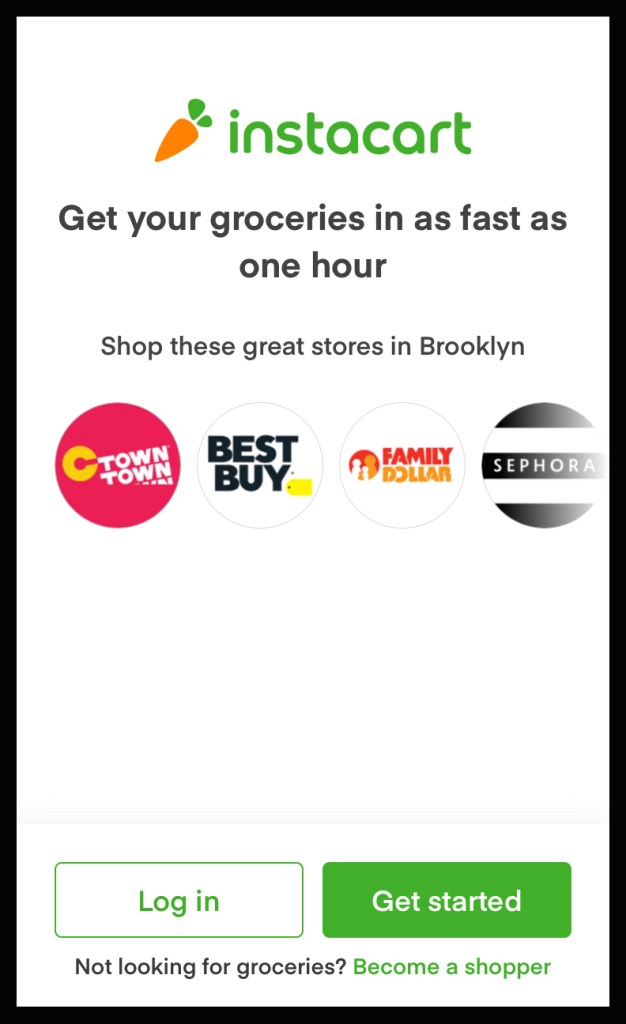
Instacart had its humble beginnings in San Francisco in 2012, when CEO and founder Apoorva Mehta, created an app to offer an alternative way to grocery shop. He became Instacart’s first online shopper and customer, ordering and delivering groceries to himself to test the accuracy and efficiency of his creation. Instacart is now available in over 5,500 cities across the US and Canada and has expanded to over 30,000 stores, with some non-grocery retailers like Sephora, Best Buy, Dick’s Sporting Goods, and Family Dollar getting in on the action. Instacart also added pharmacy delivery to its list of services in 2019.

During the pandemic, the demand for virtual shopping and home delivery service grew exponentially, leading to Instacart hiring over 500,000 new shoppers since March 2020. And whereas Amazon Fresh customers have to wait 1-3 days for their groceries to be delivered, Instacart shoppers enjoy same-day delivery, sometimes in as fast as twenty minutes, depending on your order and location.

Instacart App Screenshot

Instacart revolutionized shopping by bringing the internet to the grocery store. With plans to continue the expansion of service areas and retailers, Instacart will continue to change the way customers shop online. As innovations in technology become more mainstream and affordable, perhaps one day there will be a VR version of Instacart that brings you into the store virtually, where you can can pick out the products yourself via your shopper in real time.

Ordering anything you want from the internet has made things incredibly easy, and one might worry, to the point of causing people to become lazy. But when you are snuggled under a blanket with your feet up, eating ice cream delivered to you through an app while a robot vacuums your floors, those cares just melt away.

Photo by Pixabay from Pexels

The following sources were cited in this post:

Campbell, Richard, et al. Media & Culture: Mass Communication in a Digital Age. 12th ed., Bedford/St. Martin’s, 2019, pp. 37-39.

Wang, Jennifer. “Instacart Founder Apoorva Mehta Becomes A Billionaire After New Funding Round.” Forbes, 17 June 2020, http://www.forbes.com/sites/jenniferwang/2020/06/17/instacart-founder-apoorva-mehta-becomes-a-billionaire/?sh=28c870da7e02. Accessed 31 Jan. 2021.

https://www.instacart.com/ and the Instacart App

Cleaning in the Digital Age

In the last 50 years, we have made huge technological advancements in a multitude of areas.

With the birth of the internet and the shift from electronic to digital products, many things in our lives keep getting easier, more connected, and “smarter”. We can schedule calendar events or stream music using voice-controlled digital assistants, put refrigerators in our kitchens that can send photos of the contents to remind us what we need while we’re at the grocery store, or wear watches that will read us our emails. The advancement of this so-called “smart technology” seems like it has seeped into every fabric of our society.

Photo: Jack Sparrow/Pexel

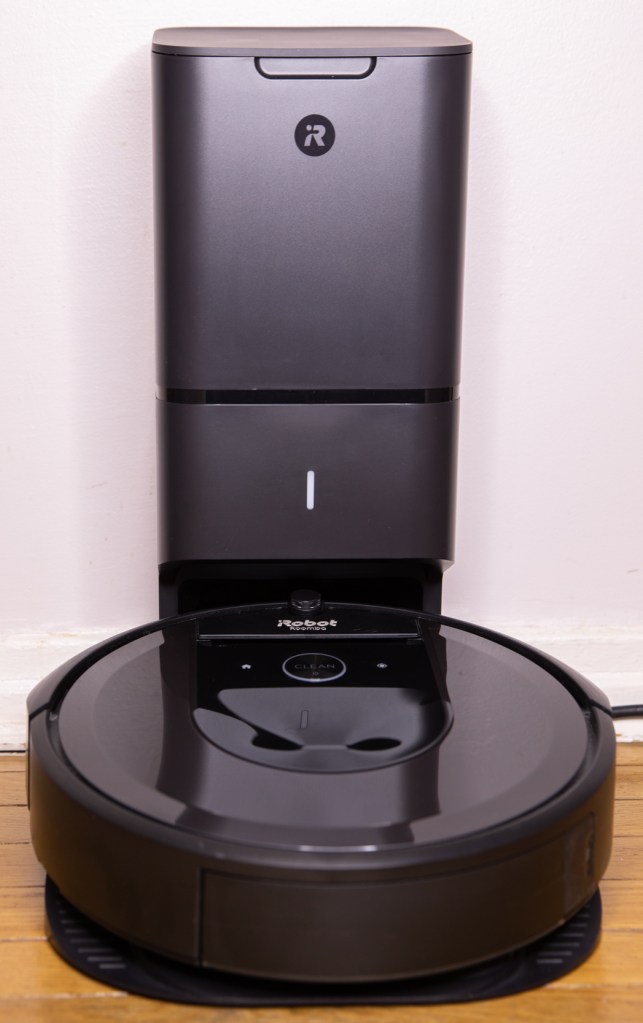
I am lucky enough to have received one of these smart inventions that make our lives easier. It began with cancelling plans for a long awaited trip to Jamaica this January. Knowing that I was disappointed, my awesome husband bought me (queue angels singing) the iRobot Roomba i7+ to cheer me up. And I have to tell you – it worked. This thing is amazing. Also, he knows me so well.

Photo: Lisa G. Alford

What was once a cumbersome manually controlled, motorized appliance has converged into a sleek, UFO looking, digitally controlled, motorized appliance. I have named it Rambo the Roomba because this thing is bad-ass and wipes out any piece of dirt that gets in its way. Equipped with a computer, linked to the internet, and controlled by an app on my smartphone, I can now vacuum my home from anywhere in the world. But that’s not all! This little piece of dream machine mapped my apartment.

Using the app, I was able to customize the map, name the rooms, and set “keep out” or “clean” zones. Is there an area Rambo gets stuck? Bam! Keep out zone. Are there places that get dirty more often? No problem! Clean zone. Using the map, I can send Rambo to whichever room I want on demand. And in case you thought it doesn’t get better, I assure you it does. I can set schedules for it to clean specific rooms, or the entire floor plan, at any time. And since I am notorious (according to my husband) for NEVER emptying the bin… when it docks, it empties it out for me. Eventually I will have to empty out the bin inside the dock, but that’s future Lisa’s problem.

“…not having to vacuum the floors multiple times a week so my long-haired cat’s fur-filled dust bunnies don’t take on a life of their own definitely frees up my time.”

I feel like a kid again with the coolest new toy, but playing with this toy is keeping this neat-freak’s home extra clean. The little girl who loved to tidy is secretly envious of the robot vacuum, but she had all the time in the world to clean. She’s an adult now. She has responsibilities and things to do. And as high as cleaning still ranks on my list of important things to do, not having to vacuum the floors multiple times a week so my long-haired cat’s fur-filled dust bunnies don’t take on a life of their own definitely frees up my time. Besides, I can still pull out the regular vacuum to do all the little nooks and crannies that Rambo can’t reach. But honestly, if there was a baby Roomba or even vacuuming arms that came out of Rambo and got those hard to reach places, I would probably never pull out my Dyson again.

Photo: Lisa G. Alford

Rambo the Roomba is just one example of how mechanization has not only advanced, but has converged with artificial intelligence to bring cleaning into the digital age. And, as we continue to improve our technologies and invent more smart appliances that make our lives easier, I can only hope that drone dusters are next on the agenda.